
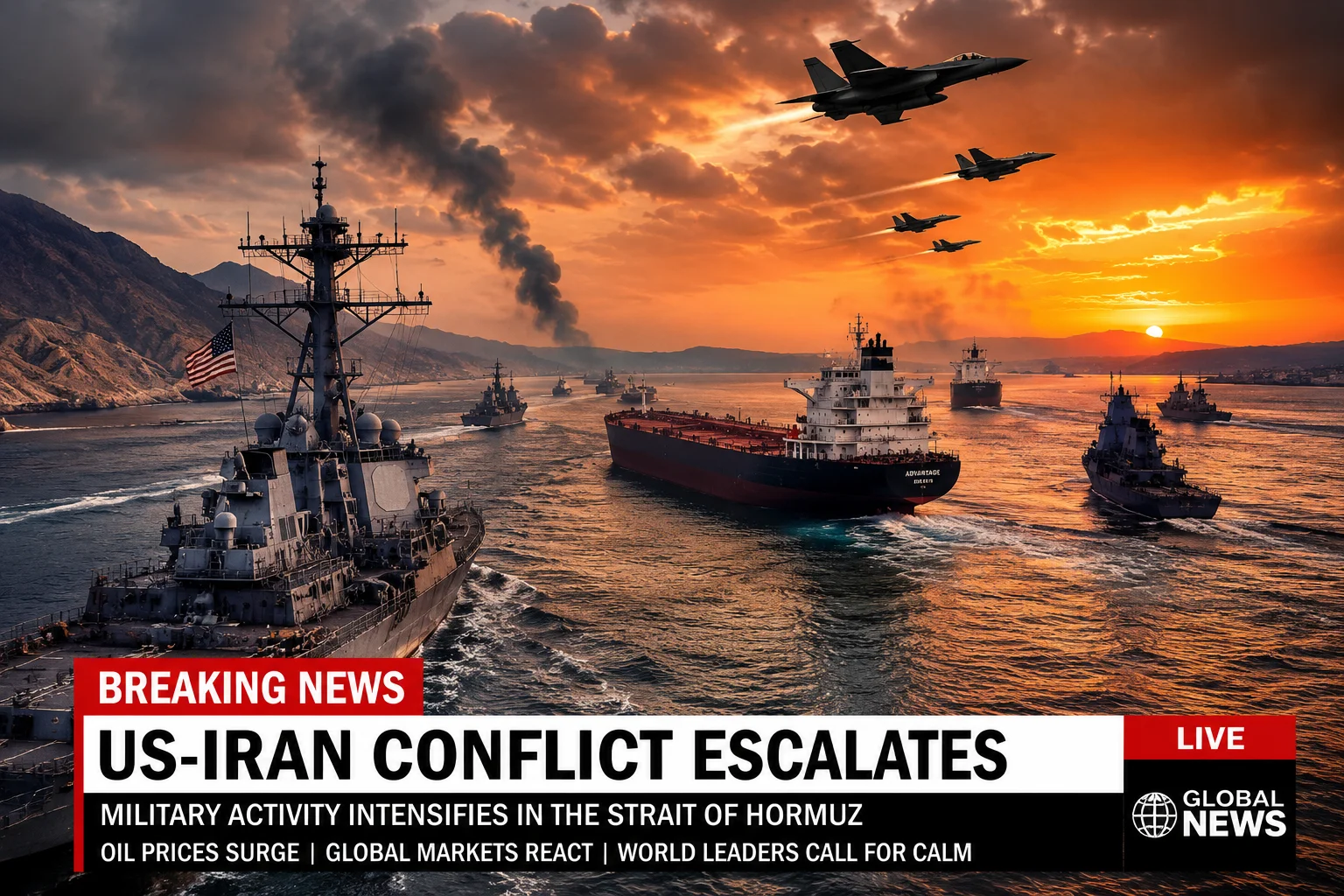
US-Iran Conflict Explained: Why the Strait of Hormuz Crisis Could Change the Global Economy
The escalating conflict between the United States and Iran has once again become one of the most dangerous geopolitical flashpoints in the world. What began as regional military escalation has now evolved into a global economic and security concern, drawing attention from governments, investors, energy markets, military alliances, and ordinary citizens across the globe.
At the center of the crisis lies one of the most strategically important waterways on Earth — the Strait of Hormuz.
Every day, millions of barrels of oil pass through this narrow maritime corridor connecting the Persian Gulf to global markets. Any disruption in this route has the power to affect fuel prices, inflation, shipping industries, international trade, and even stock markets worldwide.
In 2026, tensions surrounding the Strait of Hormuz have intensified dramatically following renewed military exchanges between the United States and Iran, along with growing regional instability involving Israel, Gulf states, and allied forces. The situation has already caused spikes in oil prices, disruptions in shipping activity, and growing fears of a wider Middle East conflict.
But why exactly are the United States and Iran in conflict? Why is the Strait of Hormuz so important? And how could this crisis impact the world economy and daily life?
This is the complete breakdown.
Understanding the US-Iran Conflict
The conflict between the United States and Iran is rooted in decades of political hostility, military rivalry, sanctions, nuclear disputes, and regional power struggles.
Relations between the two countries deteriorated significantly after the Iranian Revolution of 1979, when Iran transformed from a Western-aligned monarchy into an Islamic republic strongly opposed to American influence in the Middle East.
Over the years, the tensions have revolved around several major issues:
-
Iran’s nuclear ambitions
-
US economic sanctions
-
Military influence in the Middle East
-
Support for regional proxy groups
-
Israel-Iran rivalry
-
Oil and shipping security
While both countries have avoided full-scale direct war for decades, they have repeatedly engaged in indirect confrontation through cyberattacks, sanctions, proxy conflicts, drone incidents, and targeted military operations.
In 2026, those tensions escalated into one of the most dangerous confrontations in recent history.
What Is the Strait of Hormuz?
The Strait of Hormuz is a narrow waterway located between Iran and Oman.
Although geographically small, it is one of the world’s most critical energy routes.
Nearly one-fifth of global oil trade passes through this corridor, making it essential for international energy supply chains.
Major oil-exporting countries that rely heavily on this route include:
-
Saudi Arabia
-
Iraq
-
Kuwait
-
United Arab Emirates
-
Qatar
-
Iran
Any military disruption in this area can immediately impact:
-
Oil prices
-
Global shipping
-
Inflation
-
Airline fuel costs
-
Stock markets
-
Manufacturing industries
This is why the Strait of Hormuz is considered one of the most strategically sensitive locations on Earth.
Why the 2026 Crisis Became So Serious
The 2026 crisis intensified after military operations involving US and Israeli forces targeted Iranian military infrastructure and strategic sites. Iran responded with regional military activity, drone operations, and threats linked to maritime traffic in the Strait of Hormuz.
Reports indicate:
-
Commercial shipping traffic dropped sharply
-
Insurance costs for tankers surged
-
Military deployments increased across the Gulf
-
Global energy markets became highly volatile
The United States has conducted multiple military operations targeting Iranian drones and strategic sites near the Strait of Hormuz, while Iran has warned against foreign military presence in the region.
This has transformed the situation from a regional dispute into a worldwide economic concern.
Oil Prices and the Global Economy
Whenever conflict emerges in the Middle East, oil markets react immediately.
The reason is simple:
Modern economies still rely heavily on oil and energy transportation networks.
As tensions escalated in 2026, Brent crude prices surged due to fears that shipping through the Strait of Hormuz could be disrupted.
If the crisis worsens further, several consequences could follow:
1. Rising Petrol and Diesel Prices
Countries importing oil may face increased fuel costs.
Consumers could experience:
-
Higher petrol prices
-
Increased transportation costs
-
Expensive airline tickets
-
Higher delivery charges
2. Inflation Growth
Energy prices affect almost every industry.
When fuel becomes expensive:
-
Food prices rise
-
Manufacturing costs increase
-
Logistics become expensive
-
Consumer goods become costlier
3. Stock Market Volatility
Investors dislike uncertainty.
Geopolitical instability often causes:
-
Stock market declines
-
Cryptocurrency volatility
-
Currency fluctuations
-
Increased demand for gold
Recent reports already show financial market reactions linked to the conflict.
Why the US Is Concerned About the Strait of Hormuz
For the United States, keeping the Strait of Hormuz open is not just an economic issue but also a strategic military objective.
The US Navy has historically maintained a strong presence in the Gulf region to protect international shipping routes.
American concerns include:
-
Energy market stability
-
Protection of allies
-
Prevention of Iranian regional dominance
-
Security of global trade
Washington has repeatedly stated that international shipping lanes must remain open.
This explains why US military involvement in the region has intensified during periods of heightened tension.
Iran’s Strategic Position
Iran holds enormous geographic leverage because it borders the northern side of the Strait of Hormuz.
This gives Tehran strategic influence over maritime movement in the region.
Iran has historically used this geographic position as a pressure tool during diplomatic and military disputes.
Iranian leadership argues that foreign military activity near its coastline threatens national sovereignty and regional security. At the same time, Tehran views economic sanctions and military pressure as hostile actions designed to weaken the country politically and economically.
This strategic rivalry continues to shape the conflict.
Global Shipping Industry Under Pressure
The shipping industry has become one of the biggest casualties of the crisis.
Shipping companies operating near the Strait of Hormuz face:
-
Higher insurance premiums
-
Security risks
-
Route disruptions
-
Delayed cargo operations
Reports suggest shipping traffic through the region has dropped significantly since the conflict escalated.
This affects global supply chains, especially for:
-
Oil
-
Liquefied natural gas
-
Industrial goods
-
Consumer products
As shipping slows down, businesses worldwide face rising operational costs.
How the Conflict Could Affect India
India closely monitors developments in the Middle East because the country imports a large portion of its energy requirements from Gulf nations.
If tensions continue rising, India could face:
-
Higher crude oil import costs
-
Inflation pressure
-
Rupee volatility
-
Increased fuel prices
Additionally, millions of Indians work in Gulf countries, making regional stability highly important for India’s economic and diplomatic interests.
India traditionally attempts to maintain balanced diplomatic relations with both the United States and Iran.
Role of Israel in the Conflict
Israel has long considered Iran’s regional influence and nuclear ambitions a major security threat.
The growing alignment between the United States and Israel on Middle East security issues has further complicated regional geopolitics.
Iran, meanwhile, supports several regional groups opposed to Israeli influence.
This creates a highly interconnected regional security environment where:
-
One military action can trigger broader escalation
-
Proxy groups may become involved
-
Multiple countries can be drawn into conflict
This interconnected structure is one reason why experts fear a larger regional war.
Cyber Warfare and Modern Conflict
Modern geopolitical conflicts are no longer limited to missiles and military operations.
Cyber warfare now plays a major role.
Experts believe cyberattacks linked to infrastructure, banking systems, communication networks, and energy facilities could increase during periods of heightened tension.
This digital dimension makes modern conflicts more unpredictable and globally disruptive.
Impact on Global Politics
The US-Iran conflict is also reshaping international diplomacy.
Major powers including:
-
China
-
Russia
-
European Union nations
-
Gulf countries
are all carefully calculating their strategic responses.
China, for example, relies heavily on Middle Eastern energy supplies and closely monitors shipping disruptions.
Meanwhile:
-
Russia may benefit from higher oil prices
-
Europe fears energy inflation
-
Gulf states worry about regional instability
The conflict therefore affects not only military strategy but also global political alliances.
Why Social Media Is Amplifying the Crisis
Unlike older geopolitical conflicts, today’s wars unfold in real time on social media.
Videos, satellite images, military claims, and breaking developments spread instantly across:
-
X (Twitter)
-
YouTube
-
Instagram
-
Telegram
-
News platforms
This creates:
-
Rapid information flow
-
Viral misinformation risks
-
Psychological panic
-
Global public engagement
As a result, geopolitical crises now influence public sentiment faster than ever before.
Could This Lead to a Larger War?
This is the question dominating global discussions.
Most analysts believe that neither the United States nor Iran wants a full-scale long-term war because the economic and human costs would be enormous.
However, the danger lies in:
-
Miscalculations
-
Escalation cycles
-
Regional proxy attacks
-
Accidental military incidents
Even limited strikes can rapidly intensify tensions.
The fragile ceasefire efforts and continued military exchanges show how unstable the situation remains.
Why the World Is Watching Closely
The US-Iran conflict is not just another regional dispute.
It directly affects:
-
Energy security
-
Global inflation
-
International trade
-
Financial markets
-
Political alliances
In an interconnected world economy, instability in one strategic region can impact billions of people globally.
This is why governments, businesses, and investors are watching every development closely.
Lessons From the Crisis
The 2026 tensions highlight several important realities about the modern world:
Energy Dependency Still Matters
Despite renewable energy growth, oil remains critical to the global economy.
Geopolitics Shapes Markets
Military tensions can influence everything from stock prices to food costs.
Strategic Waterways Are Crucial
Narrow maritime corridors like the Strait of Hormuz remain globally important.
Diplomacy Remains Essential
Without diplomatic engagement, regional conflicts can escalate unpredictably.
Frequently Asked Questions (FAQs)
Why is the US-Iran conflict important?
The conflict affects global oil supply, shipping routes, energy prices, and international security.
What is the Strait of Hormuz?
The Strait of Hormuz is a critical shipping route connecting the Persian Gulf to global markets. A large percentage of the world’s oil passes through it.
Why are oil prices rising?
Oil prices rise when investors fear disruptions in global supply chains due to military conflict or shipping restrictions.
How does the conflict affect India?
India may face higher fuel prices, inflation, and economic pressure because it imports large amounts of oil from the Gulf region.
Could the conflict become a world war?
While a global war is unlikely, regional escalation remains a serious concern if tensions continue increasing.
Conclusion
The US-Iran conflict in 2026 represents far more than a regional military dispute.
It is a geopolitical crisis with the potential to influence global economics, energy markets, diplomacy, and security systems worldwide.
At the center of this confrontation lies the Strait of Hormuz — a narrow waterway carrying enormous global importance.
As tensions continue evolving, the world faces a critical question:
Can diplomacy prevent further escalation, or will geopolitical rivalry push the region toward deeper instability?
The answer could shape global politics and economic conditions for years to come.








0 Comments
No comments yet. Be the first to comment!